How a public health inspector in Zanzibar supervises 91 community health workers and what changed when she stopped planning community meetings alone.
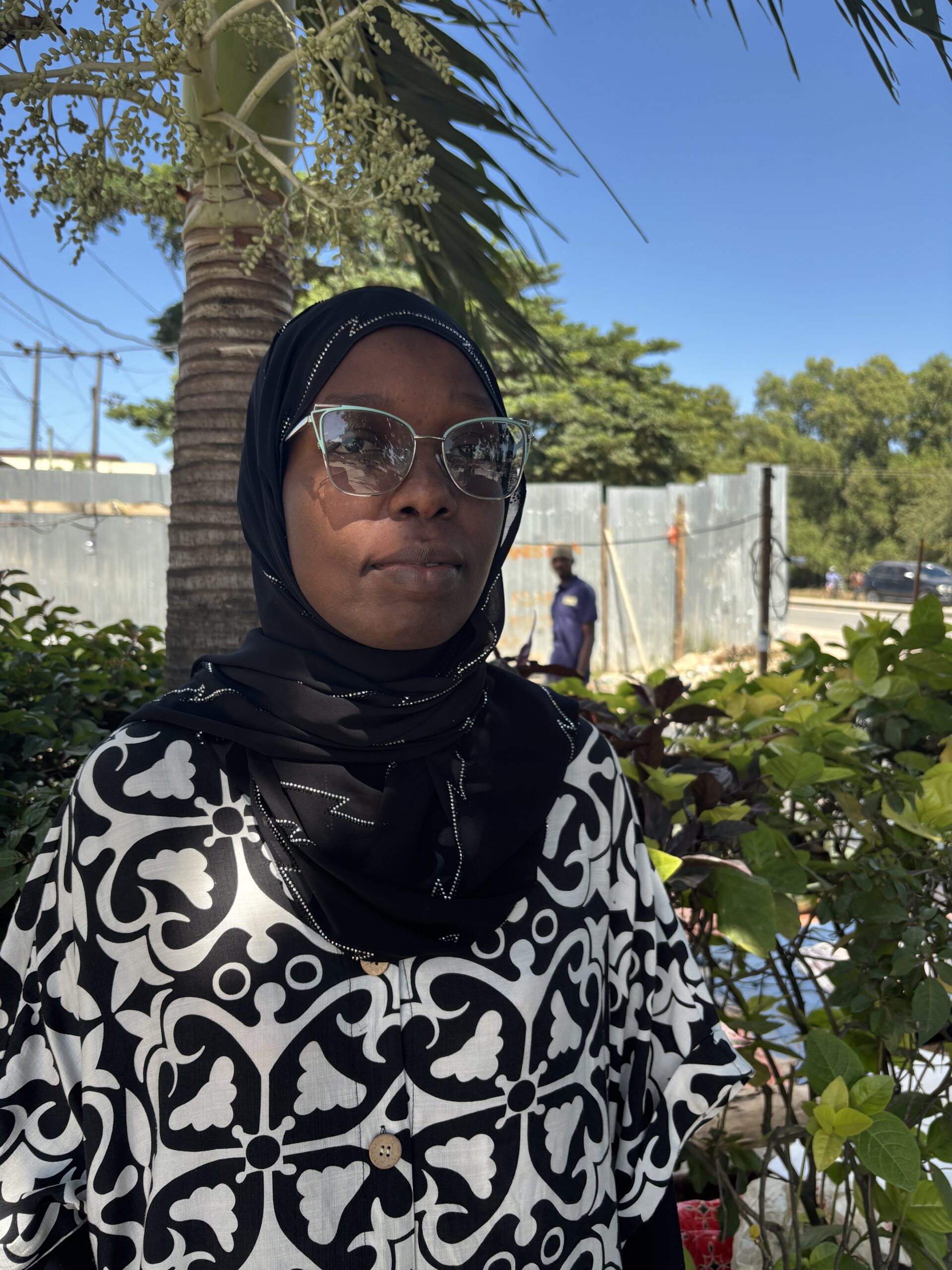
Rehema Chananta works as a public health inspector at the Magogoni Dispensary, a government health facility in Zanzibar that serves a few thousand people and is often the first place people go to when they’re sick. In the job, she’s responsible for sanitation, clean water and disease prevention in her district. She has had this job for six years and for the past two years she’s also been supervising community health workers. Currently, she is responsible for 91 community health workers across seven shehias (neighbourhoods in Zanzibar).
Most of her work takes place outside the facility and in the communities it serves. This used to be a challenge because people in those communities didn’t know her.
“Before I supervised community health workers, it was hard for me to go into the community and explain myself and share information and knowledge,” she shares.
She had the title, the training and the mandate — but none of that got her the community’s attention when she needed it. That changed when she started supervising community health workers. Because community health workers come from the same communities they serve, people already trust them. They open the door for Rehema, vouch for her, and prime the community before she arrives. She doesn’t have to start from zero every time.
What the job asks
But her work doesn’t come without challenges. There are often incidents in the community she has to manage. She gives the example of a house in her district with a leak in its drainage system. Raw water from the septic tank was spreading across the ground — the kind of contamination that carries the bacteria behind diarrhoea, cholera and typhoid. It seeps into the soil and the water people drink, cook and wash with, and the standing pools it leaves behind are where malaria mosquitoes breed. This one leak threatened the health of everyone nearby.
“I went to the area to make an assessment, and according to the procedure, we had to close the house. We contacted the owner — the landlord — because the people living there were renting. And so they had to leave, and we made arrangements to drain the septic tank and make sure the area was safe and not until then could the family move back in again”
And on top of this, she needs to manage the community health workers and give them the information and support they need so they can do their jobs well.
“The hardest part for me – I have seven shehias, 91 community health workers. It’s hard to supervise them one by one.”
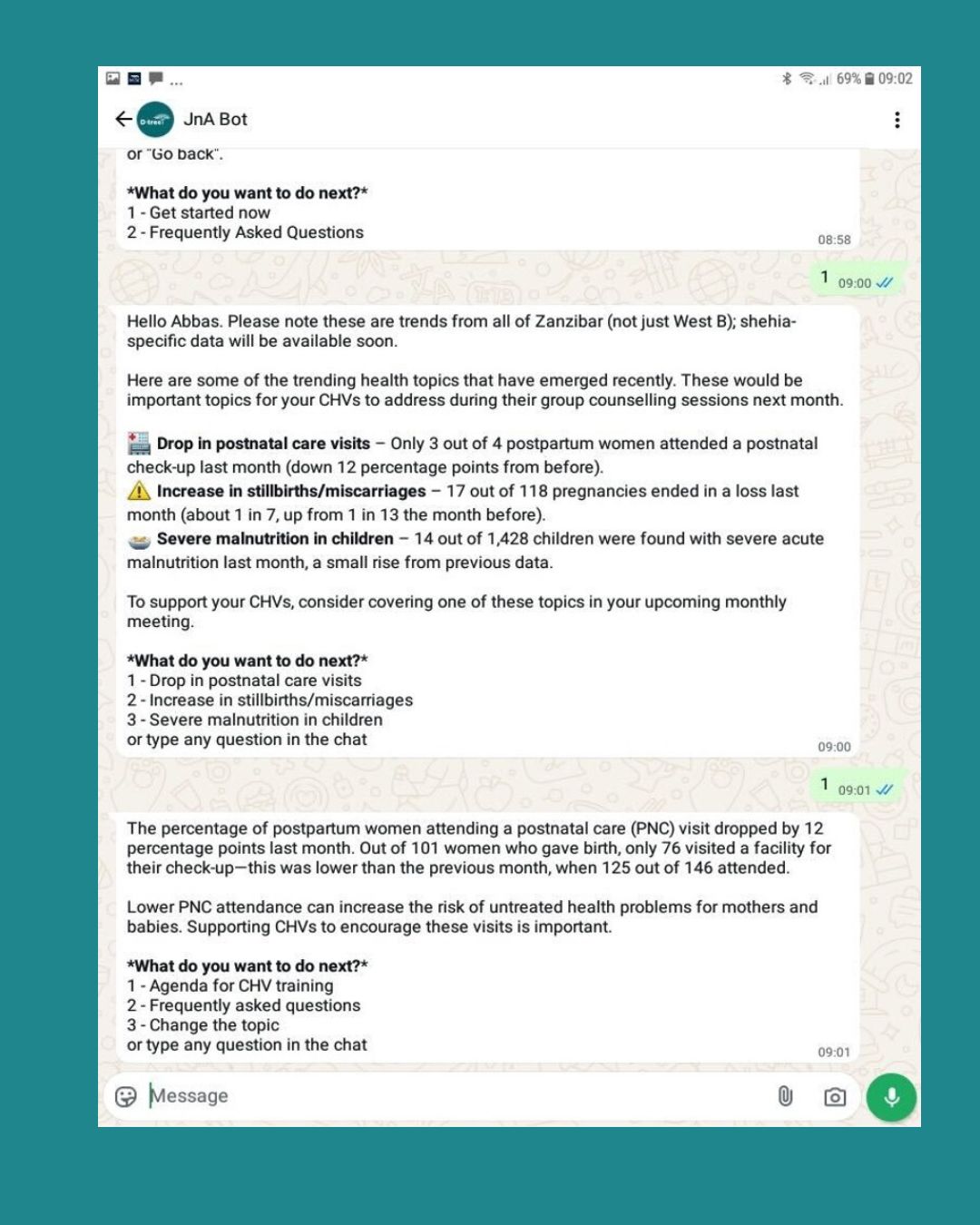
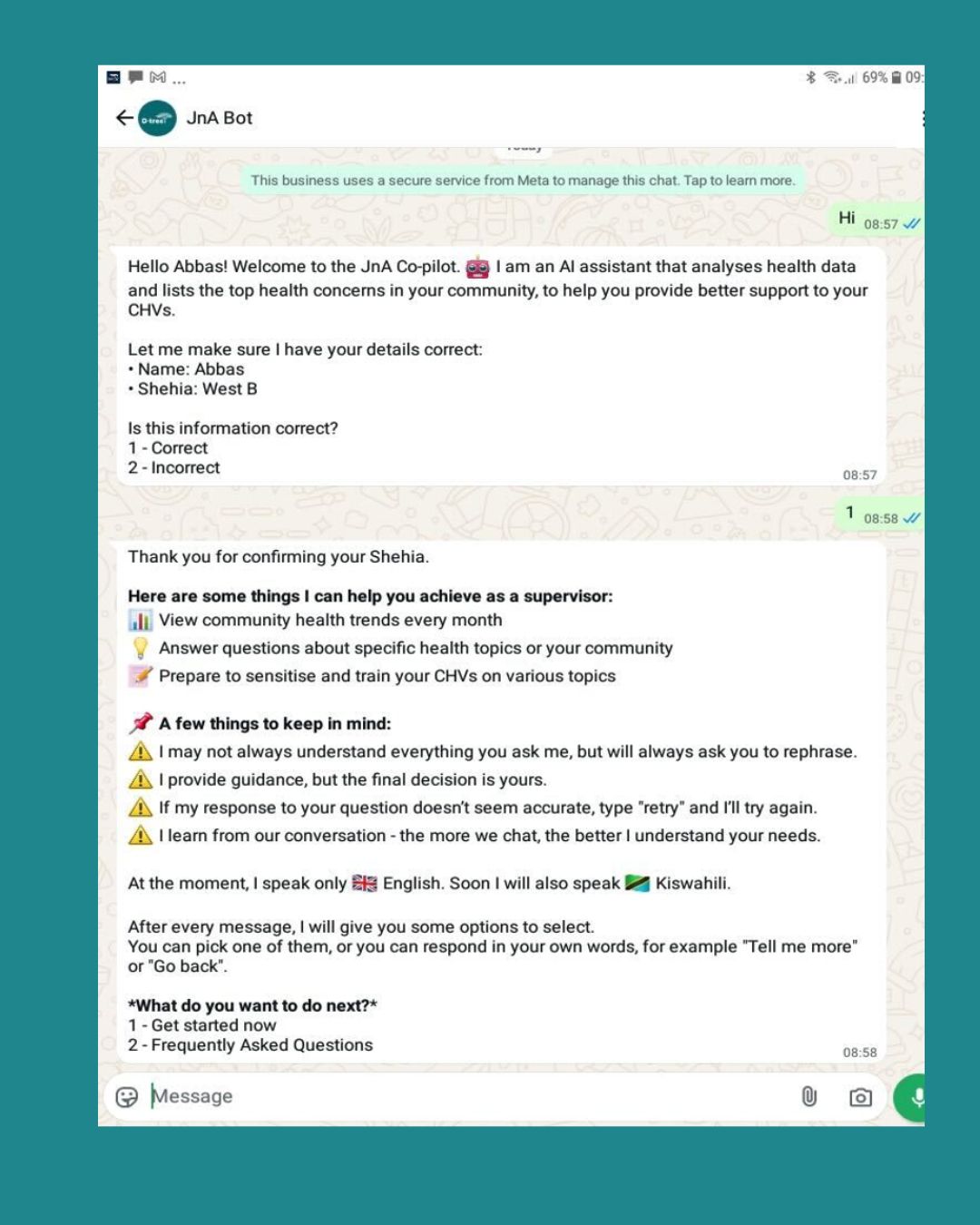
Since she started using the CHW Supervisor Companion — a WhatsApp chatbot built for supervisors in Zanzibar — that side of her job has got easier. It does three things for her. Each month it sends her a report on the health problems showing up across her shehias, drawn from live data in Jamii ni Afya, the national community health programme. When it’s time for her community health workers to run a community session, it hands her ready-made agendas, talking points and answers to the questions people ask. And it keeps her own knowledge sharp — on reproductive and child health, malaria, cholera, the danger signs to watch for and when to refer someone on. In short, it reads the data for her and tells her what’s changing in her communities, so she can act early instead of waiting to find out.
Rehema confidently explains how she uses the CHW Supervisor Companion. She opens WhatsApp on her phone and types Habari (meaning hello in Kiswahili) and from there she asks different questions depending on what she needs at the time.
Click on the screenshots to see how the chatbot works in practice
Supervisors like Rehema keep community health work anchored to what’s actually happening on the ground. If, for example, malaria cases have been climbing in one shehia, Rehema flags it, and the community health workers there run awareness sessions on how to prevent it — all according to national guidelines. The data tells her where to point them.
Before the CHW Supervisor Companion, Rehema had to ask the community health workers about what issues or trends they had noticed and review data manually, but this took a lot of time and she couldn’t be sure it really reflected the needs in a shehia.
“It saves me time and reduces my workload. I also find it useful for my role as a public health inspector. If I’m unsure of something, I try to ask the chatbot and often get good answers”
The CHW Supervisor Companion was co-designed with users like Rehema and in partnership with Dalberg and the Ministry of Health in Zanzibar. The early results have been promising. Supervisors cut meeting preparation time by 90%. Eight in ten community health workers reported receiving clearer, more actionable guidance. And 97% want their supervisors to keep using the tool.
Thanks to Stephen Africa for translation support and to Abbas Wandella for coordinating this story.