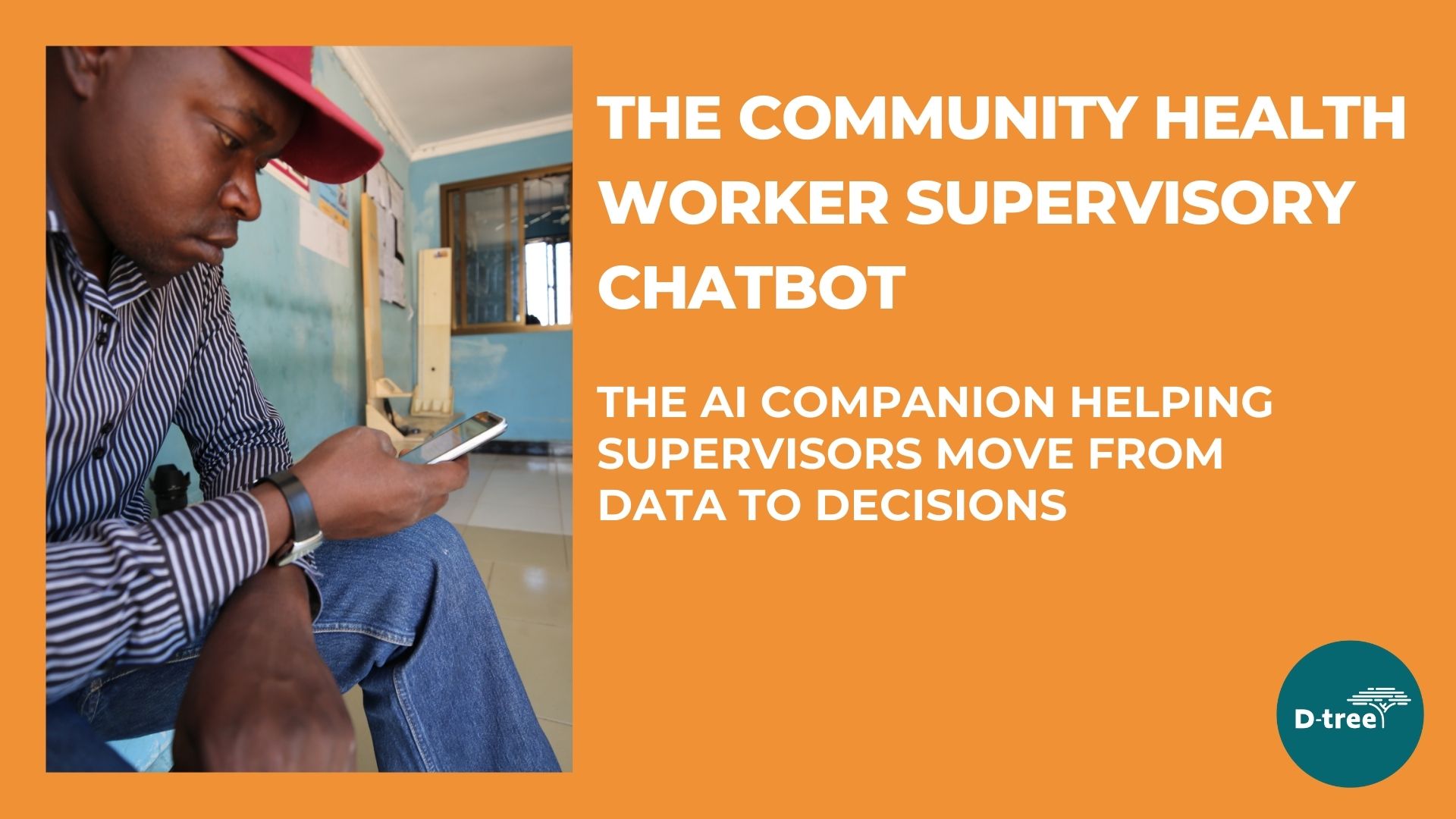
Community health workers (CHWs) are often the first – and sometimes only – point of care for communities. To do their jobs well and truly be that connective tissue between the health system and communities, they need timely, accurate guidance on what’s happening in their area: Are diarrhea or malaria cases increasing? What should families do differently right now?
Supervisors play a critical role in making this happen. Each month, they review the latest health data, identify emerging trends, and translate national protocols into practical guidance that the community health workers can use in their daily work. During monthly meetings between the supervisors and community health workers, supervisors are expected to explain these trends, remind CHWs about the guidance, and confidently answer questions.
But doing so alongside their many other responsibilities is a challenge. Reviewing large volumes of data, search for the right protocols, and turn all of this into clear, actionable advice is time-consuming. At the same time, it is so important for effective and tailored provision of health services to the community.
Together with Dalberg Data Insights and Dalberg Design and with funding from Gates Foundation, we embarked on a journey to explore how AI can support the supervisors. We followed a process that kept the supervisors and the CHWs at the centre of the solution and co-created with them. The government set the vision and made sure we aligned with national goals and priorities.
The result is a chatbot, designed with and for community health workers and their supervisors in Zanzibar. Available in Swahili and running on WhatsApp, a communications platform already widely used, it’s easy to use for the supervisors.
The chatbot works in the background, reviewing monthly health information, identifying emerging trends, and translating them into clear, actionable insights. When it detects a rise in cases, such as an increase in diarrhea, it doesn’t just flag the problem. It supports the next step.
The chatbot might prompt the supervisor: “Would you like to explore the possible causes of diarrhea in your area, and what families can do to prevent and treat it?”. And with a simple response, the supervisor can then receive a prepared meeting agenda, suggested talking points, and the relevant protocols, images, and documents to share with CHWs.