
Aditya Kulkarni, 2025 winner of the Marc Mitchell Award for Leadership & Innovation, has developed a wireless, AI-enabled, smartphone-based fetal monitoring solution.
Blog
Monitoring a million pregnancies: How one engineer is tackling stillbirth in India
 |
Feb 26, 2026
|
Feb 26, 2026
Last year, D-tree supported the Marc Mitchell Award for Innovation & Leadership for the second time. Created by the Global Digital Health Network in memory of Dr. Marc Mitchell, D-tree’s founder, this award nurtures professionals dedicated to improving healthcare delivery through digital innovation. Meet last year’s winner, Aditya Kulkarni.
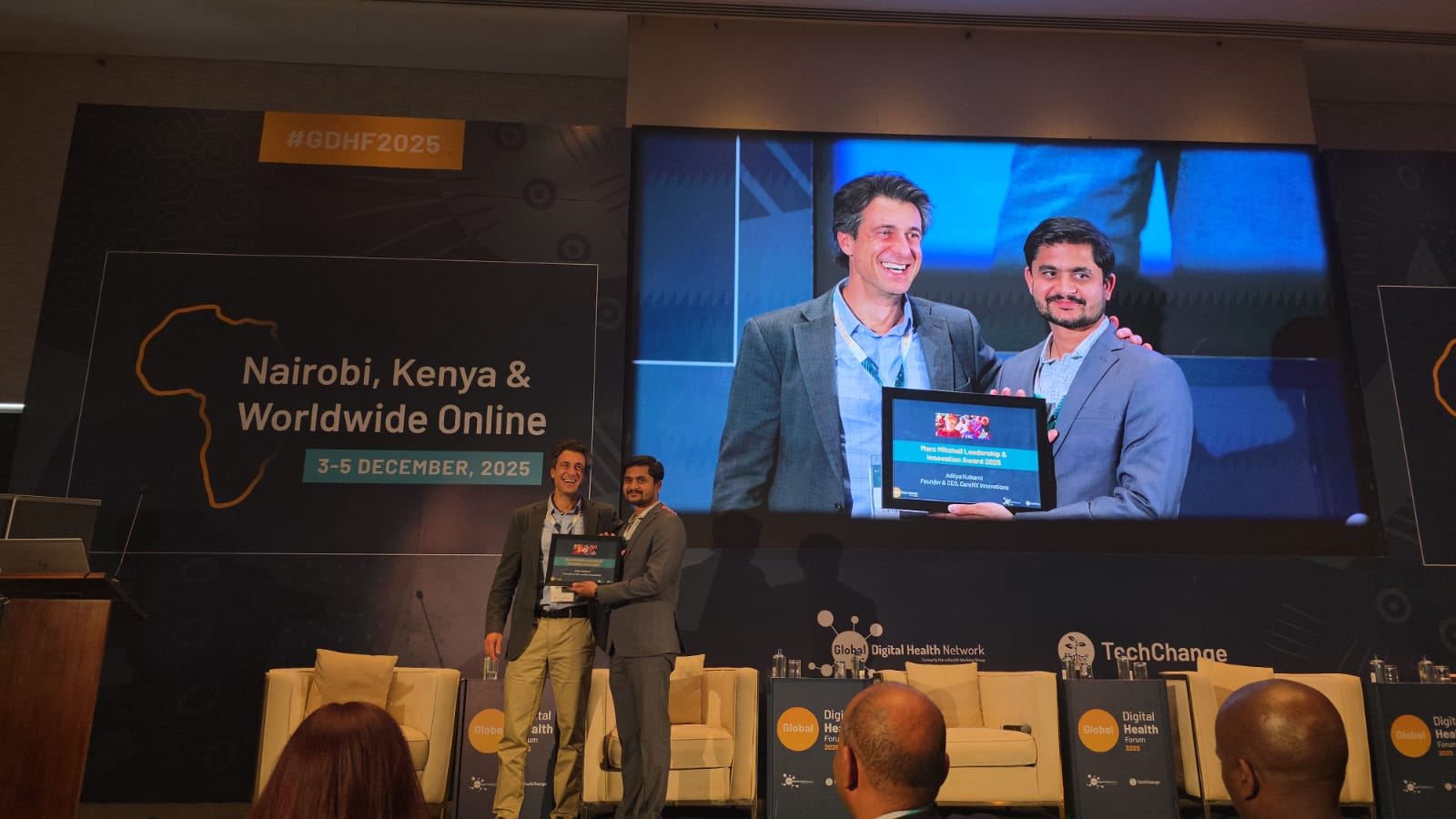
When Aditya was home in India during his PhD studies in Singapore, he learned that a friend of his sister, who was pregnant, had been rushed to the hospital and returned the next day, having lost her baby. Coming from a well-off family, she would likely have had access to quality care.
The incident opened his eyes to a larger problem: every year, over 2.6 million stillbirths occur globally, and 40% of them in India.
“It was shocking to learn that each year over 2.6 million stillbirths occur globally, with over 1 million being preventable through timely monitoring,” says Aditya.
He wanted to make a difference. He dove into learning everything he could. An expert gynecologist in Mumbai became his guide on the health topic, a friend in biomedical research offered support and the university immediately embraced his idea, providing legal backing and encouragement.
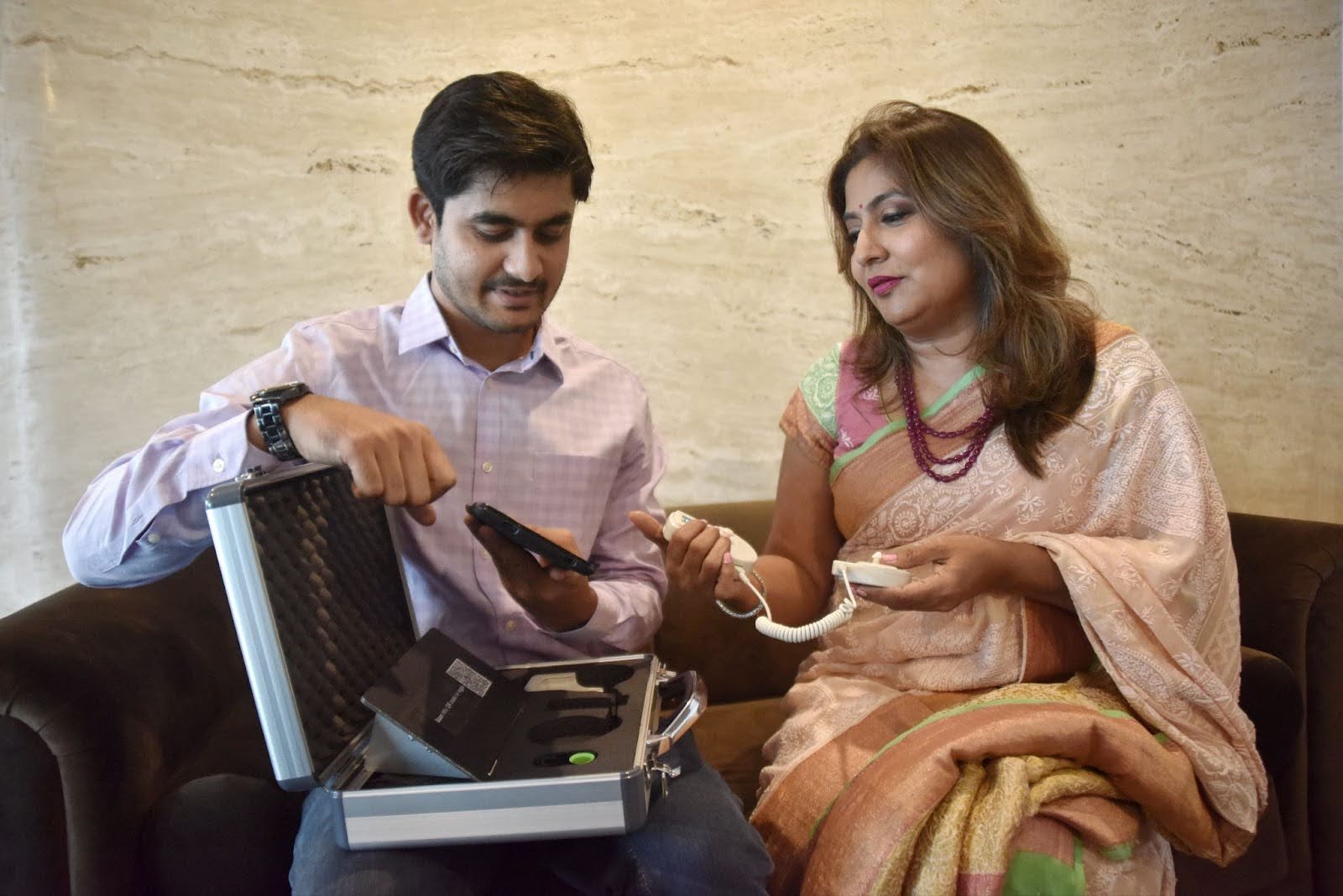
Many Indian women, especially those underserved, will not attend the full recommended prenatal visits. This means that it is absolutely essential that pregnant women, during the visits they do attend, receive the best quality care possible. However, health workers, especially in low-resource settings in India, often have limited knowledge, equipment and resources.
“As I learned about the issue, I could quickly see what was needed; a tool that anyone can use to early detect risks”
CareNX Fetosense was born: a wireless, interactive, smartphone-based CTG machine that allows non-specialized healthcare workers to monitor pregnancies and if needed, connect women with the care they and their babies may need.
Early evaluations of CareNX Fetosense have shown that it could increase fetal distress detection rate by upto 52%, which in turn helps reduce intra-uterine deaths (IUDs) by upto 33%. As of the end of 2025, Fetosense has monitored over 1 million pregnancies in India.
Now, Aditya hopes and believes the Marc Mitchell Award can be instrumental in expanding its reach.
“So far, thanks to the Marc Mitchell Award, I have been able to connect with individuals and organizations in Africa that I may not have met with otherwise. Now, I can keep those conversations going and explore how to expand into Africa to support health workers there.”
Over time, his work has evolved. He has also has developed various versions of fetal monitoring solution: Mini, Basic and Plus. Each is suitable for various healthcare settings ranging from primary health facilities to hospitals.
Over the next year, he plans to bring CareNX Fetosense to more regions, reaching additional health workers and deepening its impact. Supported by the Marc Mitchell Award, he also attended the Global Digital Health Forum last year, forming connections with people and organizations, seeing the potential to bring his innovation to their countries.
“This is much more than the tools. It is about saving babies and mothers in a cost-effective way. Our vision is simple; expanding AI-driven fetal monitoring, ensuring that no mother or baby is left behind due to lack of access to quality care.”
At D-tree, we are pleased to continue to support leadership and innovation in health care globally and can’t wait to see what Aditya will do next.
